How to Find a Reliable China Sourcing Agent
Learn how to evaluate China sourcing agents, verify suppliers, understand service fees, and manage product quality before placing your next order.
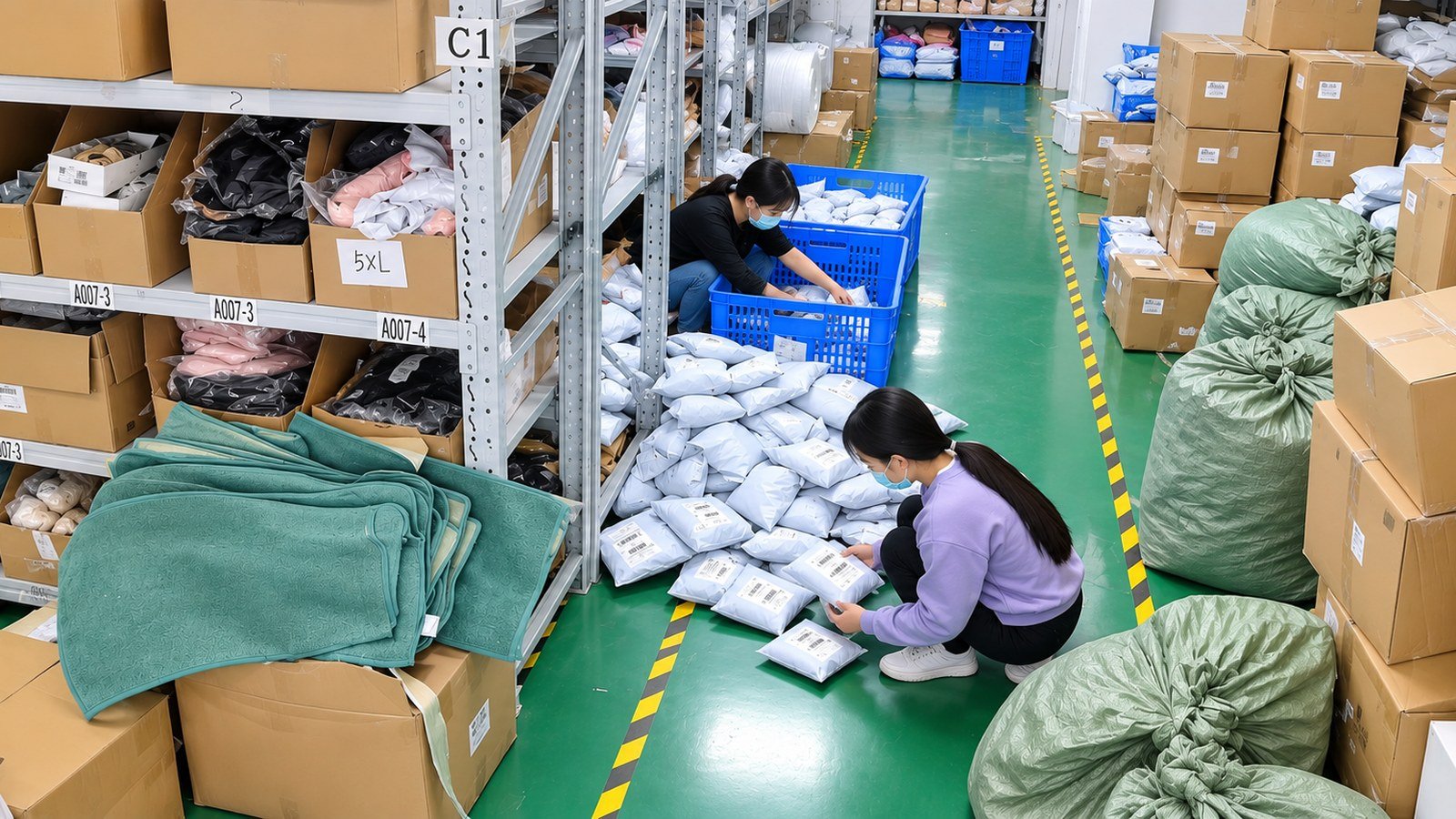

What Does a China Sourcing Agent Do?
A China sourcing agent is a purchasing department you rent. The deliverable is not an introduction to a factory or a website full of product photos — it is a product that matches your specification, at a price you can defend, arriving when you said it would.
Day to day, the work is a chain of unglamorous steps: turning your brief into a spec a Chinese factory can quote against, shortlisting factories that actually make the category, negotiating price and tooling, running sample rounds, following the line once production starts, inspecting before the balance payment, and consolidating several suppliers into one shipment with your labels on it. How that chain is split up varies by provider; ours is laid out stage by stage on the How It Works page.
The part buyers rarely anticipate: a good agent spends real time telling you no. Your target price is not achievable at that finish. That deadline is impossible. This factory’s capacity cannot be verified — use the other one. An agent who never says no is not representing you; they are processing you.
Who actually works with a sourcing agent
Four buyer types show up most often, and they need different things from the same service:
- E-commerce brands scaling past their first product. They need a supplier who can repeat a specification, not a new one every reorder.
- Marketplace sellers (Amazon, Walmart, TikTok Shop). Their constraint is usually packaging, labelling and inspection evidence, not sourcing itself.
- Dropshipping sellers moving into private label. They already know which products sell; they need a supplier, a minimum order they can afford, and quality they can trust.
- Traditional importers and distributors. They often have suppliers already and use an agent for verification, second-source backup and pre-shipment inspection.
If you recognise yourself in one of those, the rest of this page applies. If you are still validating whether a product sells at all, read the dropshipping section first — an agent is usually the wrong spend at that stage.
China Sourcing Agent vs Trading Company vs Factory
The three labels get used interchangeably in China, and plenty of trading companies call themselves agents because it sounds better. The label matters far less than this question: when price and quality conflict, whose interest gets served?
| Route | How they earn | Strength | Risk |
|---|---|---|---|
| Factory direct | Margin on the product | Best unit price at volume; direct control of production | Narrow range, real MOQs, and you own QC, packaging and freight |
| Trading company | Markup, or a rebate from the factory | Wide catalogue, fluent English, handles paperwork | You rarely meet the real factory; quality problems get managed rather than fixed at the source |
| Sourcing agent | A fee paid by you | Factory-neutral; works from your spec; handles QC, consolidation and shipping | Quality varies wildly between providers — vetting is everything |
Two honest caveats. First, many sourcing agents are trading companies in disguise, which is not automatically a problem as long as you know what you are dealing with and the price is fair. Second, the reverse also exists: some of the best agents are small teams with deep relationships in one industrial belt. They will outperform a large company in that category and disappoint you outside it. Category focus is a strength, not a limitation.
For the longer version of this comparison — including where dropshipping platforms fit and who each model serves — see What Is a Sourcing Agent and When Do You Need One?
How Much Does a China Sourcing Agent Cost?
Public information on agent fees contradicts itself, so here are the models you will actually encounter. Treat every figure as a planning range for 2026, not as a quote — pricing moves with category, order size and how much of the work the agent carries.
| Fee model | Typical reference range | What you get | What to watch |
|---|---|---|---|
| Commission on order value | 5–10% for full service; 3–5% on simple repeat orders | The agent’s income tracks your order size | Commission on what? If the unit price is opaque, the percentage means little |
| Fixed monthly retainer | roughly $500–2,000 per month | Project work: development, multi-factory sourcing, ongoing QC | Retainers with no named deliverables each month |
| Per-order service fee | roughly $50–150 per order | Light coordination on straightforward repeat buys | Fees that quietly grow as the order grows |
| Third-party inspection | roughly $100–300 per man-day | Independent inspection with photos and a defect list | Agencies that resist outside inspection on their own orders |
| “Free” agent | 0% stated | Looks free | The cost usually sits inside your unit price as a factory rebate |
These ranges are compiled from publicly listed provider rates and market practice; they are not DOWCH’s price list and no single range fits every project.
Whatever the model, insist on one thing in writing: the factory price and the agent fee quoted as two separate numbers. Once quotes are comparable on that basis, the market reorders itself — the quote that looked highest with the fee broken out is often the cheapest to land, and the “free” option is often the most expensive per unit.
The number that actually decides whether it was worth it
The fee is rarely the figure that matters. Your landed cost per good unit is — calculated after defects, rework, freight consolidation and delay. A rough version:
Take 1,000 units at $4 each: a $4,000 order. If 8% arrive unsellable, you have lost $320 in goods, plus the freight you paid on them, plus an answer to your own customers. An 8% agent fee on the same order is also $320. The fee stops looking expensive the moment it prevents one bad batch — and looks expensive the moment you are paying it for a product you could have bought from a listing.
12 Checks Before Hiring a China Sourcing Agent
If we were hiring an agent with our own money, we would run these twelve checks over about a week of email and two video calls. Most candidates disqualify themselves by check four. Each one lists what to ask and what evidence to request — the evidence matters more than the answer.

Company verification
1. The business licence matches the entity collecting your money.Ask: can you send a copy of your business licence, and is the account on the invoice the same company? Evidence: the licence, with a registered scope that covers trading or sourcing rather than consulting.
2. A real office you can see live.Ask: can we do a ten-minute video call at your desk during your working hours? Evidence: a live walk-through — sample shelves, packing tables, other people working — not a pre-recorded tour.
3. The person selling is the person doing.Ask: who will attend the factory on my behalf, and can they join the next call? Evidence: a name, and that person appearing on the call.
4. One reference you can actually call.Ask: a client selling something similar to mine — a store link, not a logo wall. Evidence: twenty minutes on a call with that client, arranged by the agent.
Operational capabilities
5. Depth in your category, with certification receipts.Ask: what do you source every week, and which certifications have you prepared yourselves (CE, FCC, FDA, RoHS)? Evidence: redacted copies, plus a candid answer about categories they do not handle.
6. A factory network with a process behind it.Ask: how do you audit and re-evaluate suppliers? Evidence: the criteria, visit frequency, and what happens when a supplier slips.
7. Whether they produce or only broker.Ask: do you have your own assembly lines, and what can you control when a partner factory falls behind? Evidence: photos or a live view of the line, and a straight answer when the honest answer is “we do not”.
8. Proof of real work, not catalogue renders.Ask: send photos from a recent production and packing run. Evidence: cartons with client artwork on a real floor, goods in stacks, an inspection table in use.
Communication and accountability
9. A written QC standard before production.Ask: what is your defect classification and inspection stage? Evidence: a document you receive before the deposit, not after the first complaint.
10. Money that can be traced.Ask: whose account receives payment, and can you split cost from fee? Evidence: a contract with your legal entity, a corporate bank account, and an itemised quote.
11. Answers you did not ask for.Ask: what usually goes wrong with a product like mine? Evidence: specific, uncomfortable detail. Vague reassurance is the answer to be suspicious of.
12. Speed with a paper trail.Ask: how quickly will I get an itemised quote, and what is its validity? Evidence: a written quote with specifications itemised and payment terms named.
Want a second opinion on a supplier you are already talking to?
Red Flags to Watch Out For
Most bad outcomes trace back to one of these. Any single one is worth stopping for:
- Payment to a personal account. WeChat or Alipay QR codes, crypto, or “my partner’s account”. Money that cannot be traced to a licensed company cannot be recovered.
- Refusing a live walk-through. A dozen rescheduled video calls is itself an answer.
- A quote far below the platform price. If it is 30% under what is publicly listed, the difference is planned — deposit, upsell, or a specification you did not agree to.
- “We can source anything.” No team is equally deep in electronics, cosmetics and furniture. Depth shows up as a narrower answer.
- No written QC standard. “We check everything carefully” is not a specification.
- No city named. You do not need the exact factory on day one, but “somewhere in Guangdong” after two weeks means they have not asked either.
- Prices that never move when your spec does. A quote identical at two quality levels means neither was priced seriously.
Do Dropshipping Sellers Need a China Sourcing Agent?
Sometimes yes, often not yet — and the distinction is worth being blunt about, because it is where a lot of money gets wasted.
Where an agent genuinely helps a dropshipping seller:
- Moving from reselling to a product of your own. Once you want your logo on the product or the packaging, you have left pure dropshipping and entered sourcing. A platform catalogue cannot do that for you.
- A product that keeps arriving damaged. If your return rate is driven by the same defect, the fix is a specification and an inspection, not a different listing.
- Small-batch testing with a real supplier. You do not need a container; you need a supplier willing to run a few hundred units so you can test before committing to volume.
- Packaging that carries your brand. Inserts, stickers, mailer boxes and thank-you cards have their own minimums and artwork process — see our packaging services.
- Holding stock without running a warehouse. Consolidating goods from several suppliers in one place, then releasing them as orders come in, is warehousing, not sourcing — but it is usually bought together.
Where a platform service is the better buy:
- You are still validating demand. Paying a sourcing fee to test a product before it has sold once is usually backwards.
- You need one unit at a time, automatically. Automated fulfilment handles that better than any human agent can.
- You are happy with a generic product and the lowest possible unit price. There is nothing to specify, so there is little for an agent to add.
The mistake we see most often is a seller hiring an agent for a product they have not validated, then blaming the agent when the product does not sell. Sourcing improves execution; it does not prove demand.
What to Expect During the First 30 Days
Nothing dramatic. The sequence is short, and every step has a point where you can still walk away. The timings below are typical for a first order, not a guarantee — factory holidays, material lead times and your own approval speed all move them.
- Days 1–5 · Spec and target costYou send photos, dimensions, materials and the price you need. You get back an itemised quote with the fee split out, plus honest feedback on what your target price can and cannot buy.
- Days 5–15 · SamplesAt least two factories, compared side by side against your spec — not against each other’s photographs. Sample and courier costs are yours; treat a few hundred dollars as tuition.
- Days 15–25 · Pilot order with an inspection gateHundreds of units rather than thousands, with a written inspection report before the balance payment. That report is the point of the exercise.
- Days 25–30 · Review the paper trailDid the report arrive without you chasing it? Were delays flagged early? You learn more about an agent in one order than in five sales calls.

How DOWCH Supports International Buyers
DOWCH works from Bao’an, Shenzhen, inside the electronics and consumer-goods supply belt. Most of our partner factories are within a two-hour drive, which means a factory visit can happen the same day a problem appears, and sample rounds are measured in days rather than weeks.
Our work covers more than sourcing: supplier management, quality assurance including factory audits and pre-shipment inspection, custom packaging, warehousing, and logistics to your warehouse or direct to your customers. In-stock items can be ordered in small quantities; custom and private label work carries a real minimum because tooling and print runs do. If you want the background on the team, the About page covers it.
What to prepare before you contact anyone
Agents quote faster and more accurately when you send five things: reference photos or a sample, dimensions and materials, the finish you expect, your target quantity, and the price you need to hit. A rough brief gets a rough quote — that is true for us as much as for anyone else.
When we are the wrong choice
We are the wrong partner if you need 100,000+ pieces of a single mature SKU straight from one large manufacturer — go direct, you will get a better price at that volume. Same if your category is one we do not handle, or if price is your only decision variable. Taking the twelve checks above and hiring someone who passes them will serve you better than hiring us for the wrong reason.

FAQ
Full-service work commonly sits in the 5–10% commission range, falling to 3–5% on simple repeat orders. Project work is often a monthly retainer, and light coordination can be charged per order. Third-party inspection is usually quoted per man-day. Treat all of these as market reference ranges, not standard rates, and ask for cost and fee to be quoted separately.
No. A trading company buys goods and resells them to you at a markup, so its interest is the margin on that transaction. A sourcing agent works for a fee paid by you and stays neutral between factories. Many agents are trading companies in disguise; the tell is whether they disclose the factory and separate cost from fee.
Three signals. The business licence scope says manufacturing or trading. A live video tour shows production lines or a desk with catalogues. And the unit price has to be explainable against the market — a middleman quoting far above factory levels without an explanation has a margin to hide.
Yes, and it is routine work: your logo on the product, retail-ready boxes, inserts and labels. Ask for photographs of real packaging runs with client artwork, and ask what minimum the packaging itself triggers — boxes have their own print minimums, separate from the product.
Only once they need something a catalogue cannot give them: a product made to their spec, packaging with their brand, or quality that survives a return-rate problem. While a product is still unproven, a platform service is usually the cheaper way to test it.
Yes, and it is a common starting point. An agent can inspect your existing factory, negotiate on your behalf, handle consolidation and freight, and qualify a backup supplier before your main one slips in peak season.
For in-stock items, small orders are workable. For custom work, the economics only settle once you are consistently above roughly $1,000–2,000 per order, because below that the fee has to be earned back from very little risk. Below that line, a marketplace is usually the more sensible tool.